Scheme
RKVY-SHC
RKVY-SHC
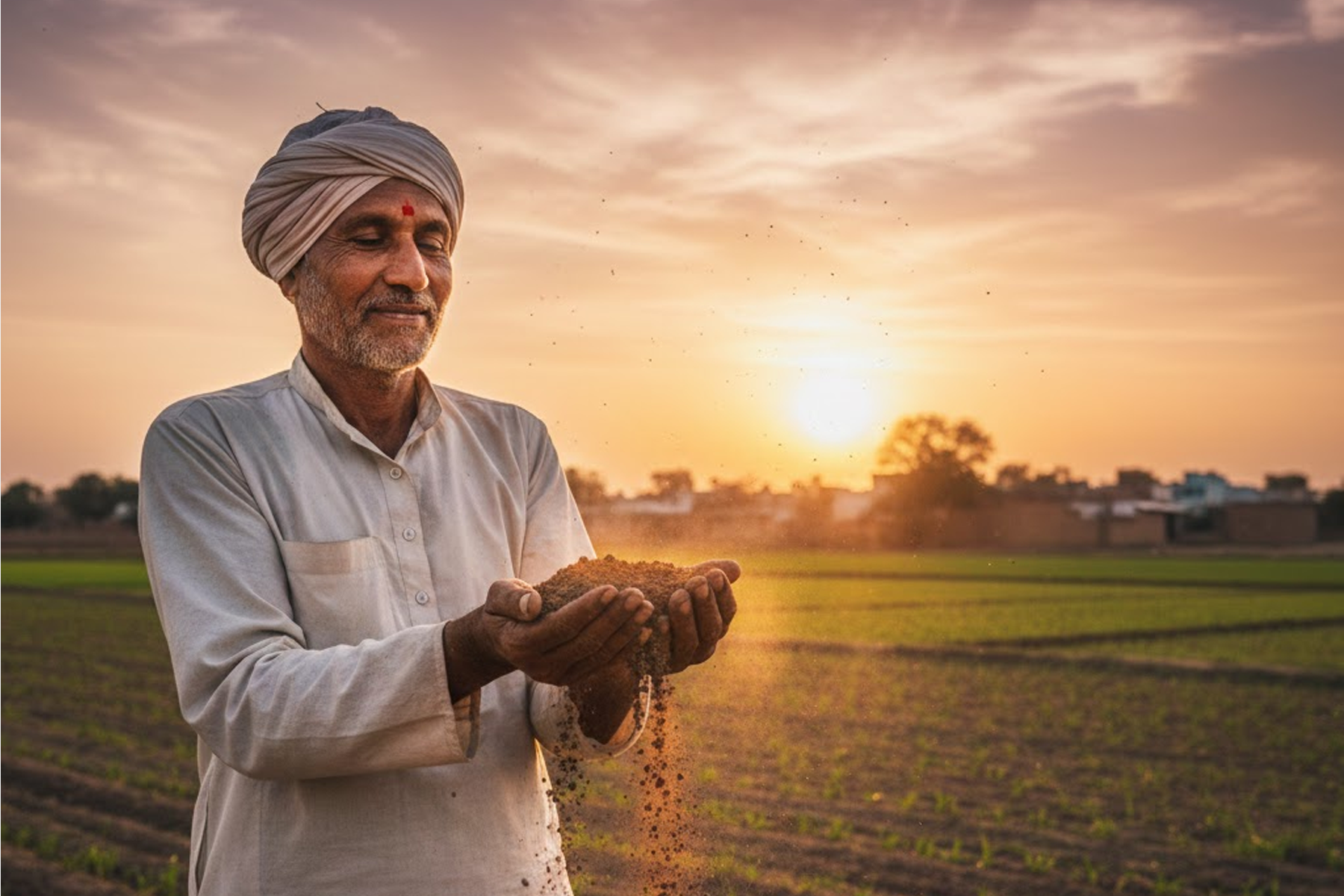
Soil health is the foundation of productive and sustainable agriculture. The RKVY Soil Health and Fertility scheme, commonly known as the Soil Health Card (SHC) scheme, is a flagship program by the Government of India aimed at empowering farmers with information about the nutrient status of their soils to promote balanced and efficient fertiliser use. Over our decades of engagement with the farming community in Kasaragod district, Kerala, we have consistently observed that farmers who understand their soil's nutrient profile are better equipped to make informed decisions about fertiliser application, leading to improved crop health and reduced input costs. [1]
The Soil Health Card scheme is implemented under the Rashtriya Krishi Vikas Yojana (RKVY) – a centrally sponsored scheme that promotes agricultural development across states. Its primary goal is to issue every farmer a "Soil Health Card" once every three years, providing crop‑wise recommendations on the nutrients and fertilisers required for their specific farms. This helps in improving soil fertility and productivity while preventing the overuse or underuse of nutrients. As per the official guidelines, the scheme covers 12 key parameters, including primary nutrients (N, P, K), secondary nutrients (S), and micronutrients (Zn, Fe, Cu, Mn, B), along with physical properties like pH, electrical conductivity, and organic carbon. [2] In our practical experience guiding farmers through the soil sampling process, we have found that timely testing and proper interpretation of the card are crucial for realising the scheme's benefits.
The scheme's strategy focuses on a comprehensive approach to soil management, as outlined by the Department of Agriculture and Farmers Welfare:
The scheme's implementation involves several crucial components, from sample collection to farmer advisories:
Farmers in Kasaragod and across Kerala can avail soil testing services at the following government‑recognised centres. These laboratories are authorised to conduct soil analysis and issue Soil Health Cards. Contact the nearest centre to schedule your soil sampling.
| Centre Name | Address / Location | Contact |
|---|---|---|
| Soil and Plant Health Clinic, Kasaragod | Civil Station, F Block, Vidyanagar P.O, Kasargod – 671 123 | 04994 257450 [email protected] |
| KVK Soil, Water and Plant Testing Laboratory | ICAR-Central Plantation Crops Research Institute (CPCRI) Campus, Kasaragod | 04994 232993 [email protected] |
| District Soil Testing Laboratory, Kasargod | Seed Farm Complex (Agriculture), Kasargod | 04994 227428 |
| District | Address | Phone |
|---|---|---|
| Thiruvananthapuram | Central Soil Testing Laboratory, Parottukonam, Nalanchira.P.O, Thiruvananthapuram - 695 015 | 0471 2533044 |
| Kollam | Soil Testing Laboratory, Kottamukku, Kollam - 13 | 0474 2797869 |
| Pathanamthitta | Soil Testing Laboratory, Kadakkad, Pandalam, Pathanamthitta | 0473 4256645 |
| Alappuzha | Soil Testing Laboratory, Sanandanapuram, Alappuzha - 3 | 0477 2266862 |
| Kottayam | Soil Testing Laboratory, Ettumanoor, Kottayam | 0482 2231156 |
| Idukki | Soil Testing Laboratory, Muthalakkodam, Thodupuzha, Idukki | 0486 2282262 |
| Ernakulam | Soil Testing Laboratory, Vyttila, Ernakulam, Kochi - 19 | 0484 2703976 |
| Thrissur | Soil Testing Laboratory, Chempukavu, Thrissur - 20 | 0487 2320630 |
| Palakkad | Soil Testing Laboratory, Pattambi, Palakkad - 679 306 | 0466 2212091 |
| Malappuram | Soil Testing Laboratory, Malappuram - 5 | 0483 2731390 |
| Kozhikode | Soil Testing Laboratory, Tikkotti, Kozhikode | 0496 2600250 |
| Wayanad | Soil Testing Laboratory, Mananthavady, Wayanad | 0493 5442499 |
| Kannur | Soil Testing Laboratory, Ondane Road, Camp Bazar, Kannur - 1 | 0460 2206812 |
| Kasargod | Soil Testing Laboratory, Seed Farm Complex (Agri), Kasargod | 04994 227428 |
Source: Kerala State Department of Agriculture. In addition to these stationary laboratories, the department also operates 9 mobile soil testing laboratories across the state to improve outreach. Farmers are advised to contact their local agriculture office or the Kasaragod Soil and Plant Health Clinic for the latest sampling schedules and card distribution.[3]
To get your soil tested and receive a Soil Health Card, you generally need to provide the following information to the concerned agriculture officer or sampling team:
Farmers are advised to have these documents ready when the sampling team visits their field, or they can approach the local agriculture office to initiate the process.
The Soil Health Card scheme offers multiple advantages for farmers, going beyond simple soil testing:
The scheme is designed to be inclusive and benefits a wide range of agricultural stakeholders, as per the government's guidelines:
Farmers can register for a Soil Health Card by contacting their local agriculture officer, visiting the nearest Krishi Vigyan Kendra (KVK), or approaching the State Agriculture Department's soil testing laboratory. The process is often facilitated through state‑level portals, but the typical steps are:
Farmers can also check the official Soil Health Card portal (soilhealth.dac.gov.in) for online status and additional resources. At Vikas Agro Service, we often assist farmers in understanding the documentation needed and liaising with the local agriculture authorities to ensure a smooth process.
The Soil Health Card provides recommendations specific to your field and the crop you intend to grow. It is advisable to carry the card when purchasing fertilisers and to follow the recommended doses and timings. Remember that soil health is dynamic – factors like rainfall, cropping intensity, and organic matter additions can alter nutrient levels. Hence, it is recommended to get your soil retested after three years for a new card with updated advice. Also, ensure that the sampling is done correctly; if you have any doubts, you can request the agriculture officer to guide you through the process.
Vikas Agro Service, with its deep roots in Kasaragod, complements soil health management by providing efficient irrigation pumpsets and agricultural machinery that help in the precise application of water and nutrients, ensuring that the recommendations from your Soil Health Card are implemented effectively.
Vikas Agro Service, with over 35 years of service to the agricultural community in Kasaragod district, Kerala, is committed to supporting farmers in adopting scientific farming practices. While we do not directly conduct soil testing, we provide expert guidance on irrigation systems, pumpsets, and farm machinery that help farmers implement the nutrient recommendations from their Soil Health Card efficiently. We believe that healthy soil, combined with optimal water management, is the cornerstone of sustainable agriculture. Farmers are advised to verify the latest scheme guidelines, sampling schedules, and card distribution procedures from their local agriculture department or the official Soil Health Card portal (soilhealth.dac.gov.in) to ensure they receive accurate and timely support.