Scheme
PM-KUSUM
PM-KUSUM
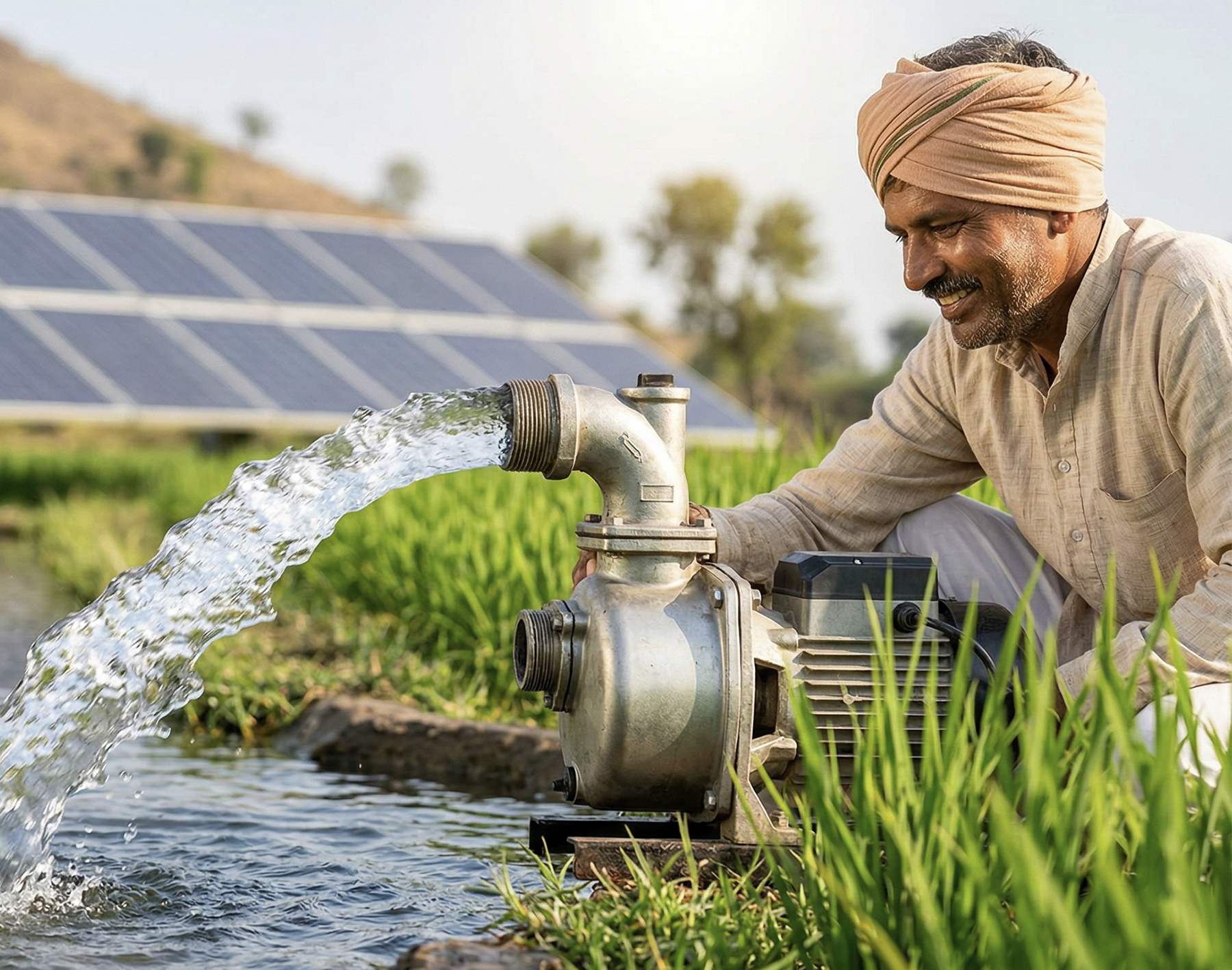
The Pradhan Mantri Kisan Urja Suraksha Evam Utthaan Mahabhiyan (PM-KUSUM) is a central sector scheme launched by the Ministry of New and Renewable Energy (MNRE) to promote the use of solar energy in agriculture. It enables farmers to install solar pumps and grid‑connected solar power plants, with the aim of reducing reliance on diesel and grid electricity, while also offering potential income through surplus power sales. Based on our long‑standing engagement with the farming community in Kasaragod, we have observed that access to reliable and affordable energy is a critical enabler for sustainable farming. While Vikas Agro Service does not directly deal in solar equipment, we remain committed to supporting farmers with high‑quality irrigation pumpsets, agricultural machinery, and expert advice on system integration.
Launched in March 2019, PM-KUSUM is designed to accelerate renewable energy adoption in the agricultural sector. The scheme provides substantial financial support—in the form of subsidies and loans—for installing solar irrigation systems and solar power plants on farmlands. As of December 2025, the scheme has reportedly benefited over 21.77 lakh farmers, with a cumulative installed solar capacity of 9,466 MW across India. [1] These figures, as cited by the MNRE, indicate the growing reach of the programme. In our experience guiding farmers through various government initiatives, we have found that a clear understanding of the scheme's components and documentation requirements is essential for a smooth application process.
The PM-KUSUM scheme is structured around three main components, as detailed in the official guidelines:
PM-KUSUM is open to individual farmers, groups of farmers, Farmer Producer Organisations (FPOs), panchayats, and cooperatives. The financial structure is designed to minimise the upfront burden on farmers:
Illustrative Example: For a 5 HP solar pump with a benchmark cost of approximately ₹1.20 lakh, the farmer's upfront contribution would be around ₹12,000 (10%), while the government contributes ₹72,000 (60% subsidy) and a bank loan covers the remaining ₹36,000 (30%). These figures are indicative; farmers are advised to refer to the latest state‑wise benchmark costs and subsidy notifications on the official portal. [2]
As per the official PM-KUSUM guidelines, the following documents are typically required for application:
The scheme offers several potential benefits to farmers, as outlined by the MNRE:
Actual benefits depend on project execution, state policies, and individual farm conditions.
Farmers can apply online through the official PM-KUSUM portal, as per the following general steps:
For farmers who need assistance, Vikas Agro Service, with its deep roots in Kasaragod, can help in understanding the documentation and liaising with local agricultural authorities—though we do not install solar systems ourselves. We recommend that farmers always follow the official process and avoid any unauthorised intermediaries.
Vikas Agro Service, with over 35 years of dedicated service to the farming community in Kasaragod district, Kerala, remains steadfast in its commitment to supporting agriculture through reliable pumpsets, modern irrigation systems, and a wide range of farm machinery. While we do not deal in solar equipment, we encourage farmers to explore government schemes like PM-KUSUM that can reduce energy costs and enhance sustainability. For any assistance with irrigation infrastructure or machinery selection, our team is always ready to provide expert advice. Please note: all scheme‑related benefits, eligibility, and financial terms are subject to change as per government notifications. Farmers are strongly advised to verify the latest guidelines from the official PM‑KUSUM portal (pmkusum.mnre.gov.in) or their state agriculture department before making any investment.