5 Signs Your Agricultural Pump Needs Immediate Repair or Replacement
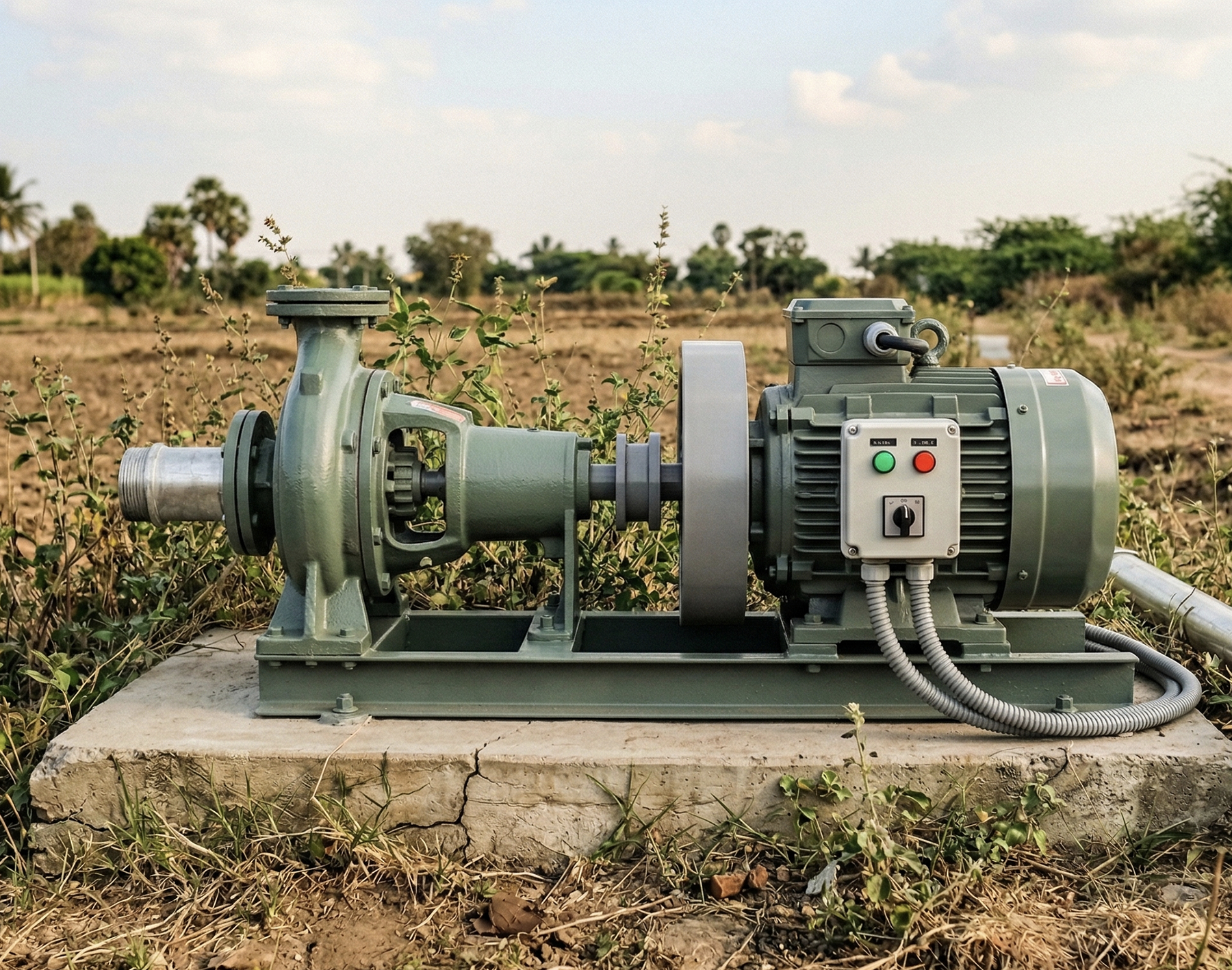
Your agricultural pump is the heartbeat of your farm. When it works, water flows, crops thrive, and income is secure. But when it starts failing, every delayed irrigation cycle puts your yield at risk. The key to avoiding catastrophic failure—and expensive emergency repairs—is recognizing the early warning signs. Whether you use a Lubi, Crompton, or Sharp TEG pump, here are five critical signs that your pump needs professional attention or replacement.
Important: Ignoring these signs can lead to complete pump failure, motor burnout, or even damage to your borewell structure. Early action saves money and prevents crop loss.
Sign #1: Reduced Water Flow or Pressure
If your pump is running but the water output is noticeably weaker than before—fewer sprinklers rotating, drip lines trickling instead of flowing, or longer times to fill a tank—something is wrong.
- Possible Causes:
- Worn-out Impellers: Over years of use, the vanes that push water wear down, reducing pumping efficiency.
- Clogged Suction Line or Foot Valve (Jal Kund): Debris or sediment buildup restricts inflow.
- Borewell Silting: The water level may have dropped, or the borewell is filling with sand.
- Air Leak in Suction Pipe: Common in openwell pumps; cracks or loose joints let air in.
- Action: Check for visible leaks and clean the foot valve. If flow remains low, the pump may have internal wear. For borewell pumps, a professional water level test is needed.
Sign #2: Unusual Noises (Grinding, Rattling, or Screeching)
Pumps should run smoothly. New or strange sounds are red flags.
- Grinding or Growling: Usually indicates bearing failure. Bearings keep the shaft rotating smoothly; when they wear out, metal grinds on metal.
- Rattling: Loose components, cavitation (air bubbles imploding inside the pump), or debris inside the casing.
- Screeching: Often a sign of a dry run—the pump is running without water, causing internal seals to burn.
- Action: Stop the pump immediately if you hear grinding or screeching. Running a pump with bad bearings can destroy the motor. Call a mechanic to inspect and replace bearings or seals.
Sign #3: Frequent Tripping of Circuit Breakers or Overload Relays
If your MCB trips repeatedly or the overload relay on your starter keeps clicking off, the pump motor is under stress.
- Possible Causes:
- Motor Overheating: Due to voltage fluctuations, overloading, or poor ventilation.
- Winding Insulation Breakdown: Old motors lose insulation, causing current leakage (earth fault).
- Mechanical Seizure: The pump is becoming hard to turn due to worn bearings or debris.
- Single Phasing (3-Phase): One phase is missing, making the motor draw excess current from the remaining phases.
- Action: Note how often it trips. If it happens immediately on startup, suspect a major electrical fault. If it trips after 15-20 minutes, it could be overheating. Get your motor's insulation resistance tested by an electrician.
Sign #4: Visible Leaks, Rust, or Physical Damage
A visual inspection can reveal a lot.
- Water Leaks: Leaking from shaft seals (the point where the shaft enters the pump casing) or casing joints indicates seal failure. This will worsen and can lead to motor flooding in monoblock pumps.
- Rust and Corrosion: Surface rust is normal, but deep pitting or corrosion on the pump casing weakens the structure and can lead to sudden cracking.
- Cracks in Casing: Impact or freezing (in rare cases) can crack the casing, causing major leaks.
- Action: Small seal leaks can be repaired. Significant rust or cracks, especially on pressure-rated parts, often mean replacement is safer and more economical.
Sign #5: Skyrocketing Electricity Bills (Reduced Efficiency)
If your electricity bill has jumped but your water usage hasn't increased, your pump might be losing efficiency.
- Why It Happens: As pumps wear internally (impellers, clearances widen), they work harder to deliver the same amount of water. They draw more power but pump less water—a double loss.
- Comparison: If your 5 HP pump used to fill a tank in 2 hours and now takes 3 hours for the same tank, it's consuming 50% more energy.
- Action: Calculate your pump's "water discharged per unit of electricity." If efficiency has dropped significantly, a repair (like impeller replacement) or a new energy-efficient pump from Crompton or Lubi may pay for itself in power savings within a year.
Repair or Replace? A Quick Decision Guide
| Situation | Repair Likely Sufficient | Consider Replacement |
|---|---|---|
| Minor leaks, seal issues | Replace seals, small cost | Not needed |
| Worn bearings, noisy operation | If motor and casing are good | If motor shaft is worn or casing damaged |
| Burnt motor windings | Rewinding possible (costly, reduces efficiency) | Often better to buy new energy-efficient motor |
| Pump age > 8-10 years, frequent breakdowns | Temporary fix | Strongly recommended |
| Cracked casing or severe rust | Not safe or durable | Immediately |
Brand-Specific Considerations
| Brand | Common Age-Related Issues | Repair vs. Replacement Note |
|---|---|---|
| Lubi Pumps | Energy efficiency may drop after 8-10 years; bearings wear. | Lubi offers good service support; compare rewinding cost against new Lubi's 5-star energy rating. |
| Crompton Pumps | Widely available spares; capacitors and starters may need replacement. | Easy to repair due to extensive service network. Replacement justified if motor keeps burning out. |
| Sharp TEG Pumps | Robust construction, but panel components may age. | Check panel health first. If pump body is sound, rewinding with genuine copper wire is viable. |
The Cost of Waiting
- Minor repair cost: ₹1,000 - ₹3,000 (seals, bearings, capacitor)
- Major repair cost: ₹5,000 - ₹15,000 (rewinding, impeller replacement)
- New pump cost: ₹15,000 - ₹50,000+ depending on HP and type
- Cost of crop loss due to irrigation failure: Potentially lakhs of rupees
The math is clear: addressing small problems early prevents big losses later.
Conclusion
Your pump works silently day after day, but it does give warnings before it fails. Reduced flow, strange noises, frequent tripping, visible damage, and rising electricity bills are all signals that your Lubi, Crompton, or Sharp TEG pump needs attention. By acting on these signs early, you can choose between a simple repair or a planned replacement—ensuring your crops get water when they need it most, without unexpected breakdowns or emergency expenses.
Disclaimer: This guide provides general information for educational purposes. Pump models, electrical systems, and local conditions vary. Always consult the user manual provided by your pump manufacturer (Lubi, Crompton, Sharp TEG, etc.) and seek assistance from a licensed electrician or certified pump technician for any diagnostics or repairs involving electrical components or complex mechanical issues. The author and publisher assume no liability for any damage, injury, or loss incurred as a result of following this information.

Recent


Follow Us